🔬 Understanding the Diagnostic Journey for Parkinson's Disease (PD) 🧠
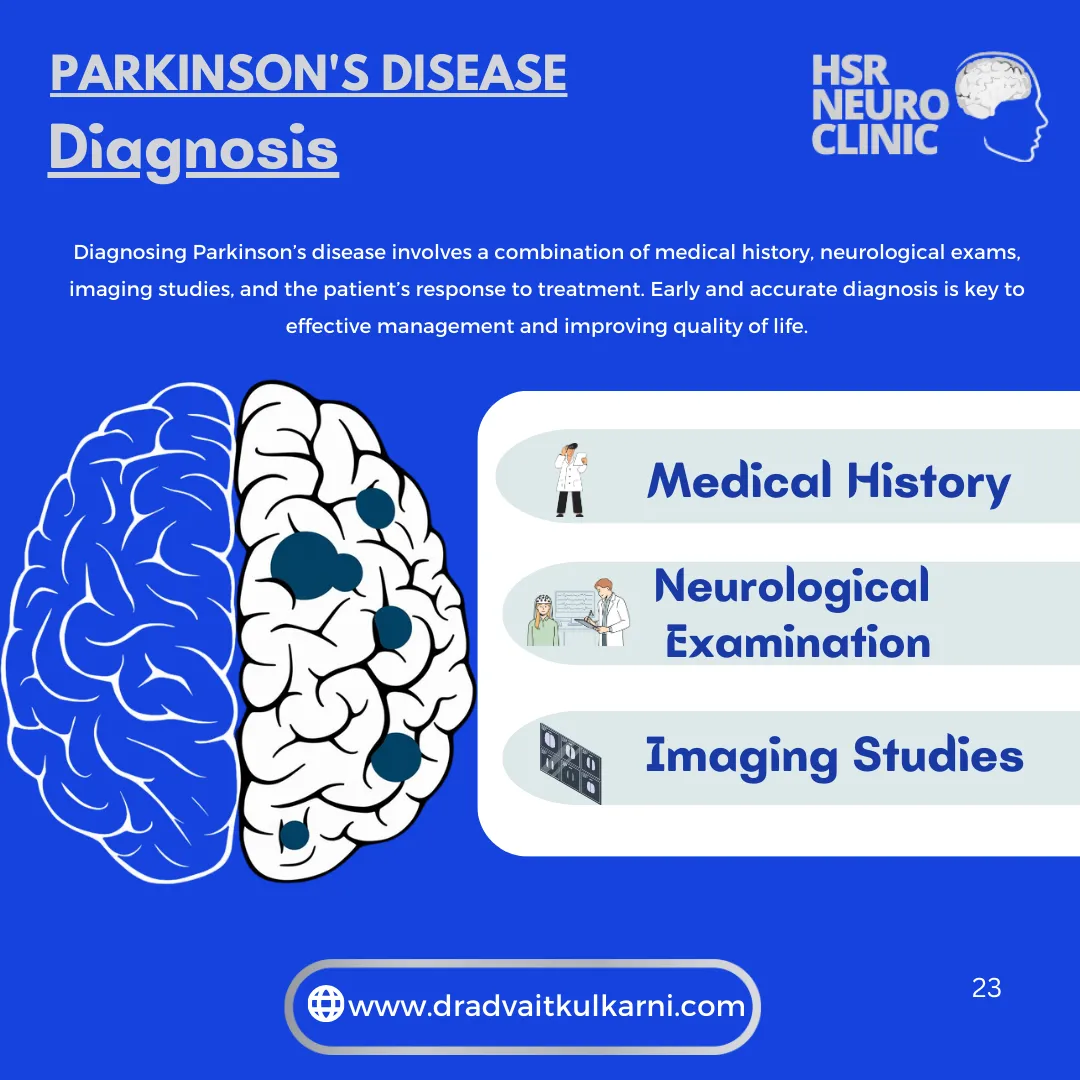
Diagnosing Parkinson's disease can be complex, as no single test exists. The process involves a thorough clinical evaluation, a review of medical history, specialized imaging studies, and a response to treatment. Early diagnosis is key to managing symptoms and improving quality of life.
Key steps in the diagnostic process include:
Medical History & Symptom Review: Identifying symptoms like tremor, bradykinesia (slowness), rigidity, and postural instability.
Neurological Examination: Observing motor symptoms and testing for rigidity and bradykinesia.
Levodopa Response: Improvement after levodopa suggests PD, though not exclusive to it.
Imaging Studies: DAT scans, MRI, or CT scans can help confirm the diagnosis and rule out other conditions.
Clinical Criteria: Following established guidelines (e.g., UK Parkinson's Disease Society Brain Bank Criteria) to confirm motor symptoms and rule out other causes.
Additionally, cognitive testing, blood tests, and a differential diagnosis help distinguish PD from other conditions like Essential Tremor, Multiple System Atrophy (MSA), and Progressive Supranuclear Palsy (PSP).
As PD progresses, regular follow-ups with a neurologist are essential for adjusting treatment and monitoring symptom changes.
Early recognition and a tailored treatment plan can significantly enhance quality of life for those affected by Parkinson’s.
#ParkinsonsDisease #HealthcareInnovation #Neurology #MedicalDiagnosis #PatientCare #NeurodegenerativeDisorders #ParkinsonsAwareness #EarlyDiagnosis #MovementDisorders
Diagnosing Parkinson's disease can be complex, as no single test exists. The process involves a thorough clinical evaluation, a review of medical history, specialized imaging studies, and a response to treatment. Early diagnosis is key to managing symptoms and improving quality of life.
Key steps in the diagnostic process include:
Medical History & Symptom Review: Identifying symptoms like tremor, bradykinesia (slowness), rigidity, and postural instability.
Neurological Examination: Observing motor symptoms and testing for rigidity and bradykinesia.
Levodopa Response: Improvement after levodopa suggests PD, though not exclusive to it.
Imaging Studies: DAT scans, MRI, or CT scans can help confirm the diagnosis and rule out other conditions.
Clinical Criteria: Following established guidelines (e.g., UK Parkinson's Disease Society Brain Bank Criteria) to confirm motor symptoms and rule out other causes.
Additionally, cognitive testing, blood tests, and a differential diagnosis help distinguish PD from other conditions like Essential Tremor, Multiple System Atrophy (MSA), and Progressive Supranuclear Palsy (PSP).
As PD progresses, regular follow-ups with a neurologist are essential for adjusting treatment and monitoring symptom changes.
Early recognition and a tailored treatment plan can significantly enhance quality of life for those affected by Parkinson’s.
#ParkinsonsDisease #HealthcareInnovation #Neurology #MedicalDiagnosis #PatientCare #NeurodegenerativeDisorders #ParkinsonsAwareness #EarlyDiagnosis #MovementDisorders
Keywords