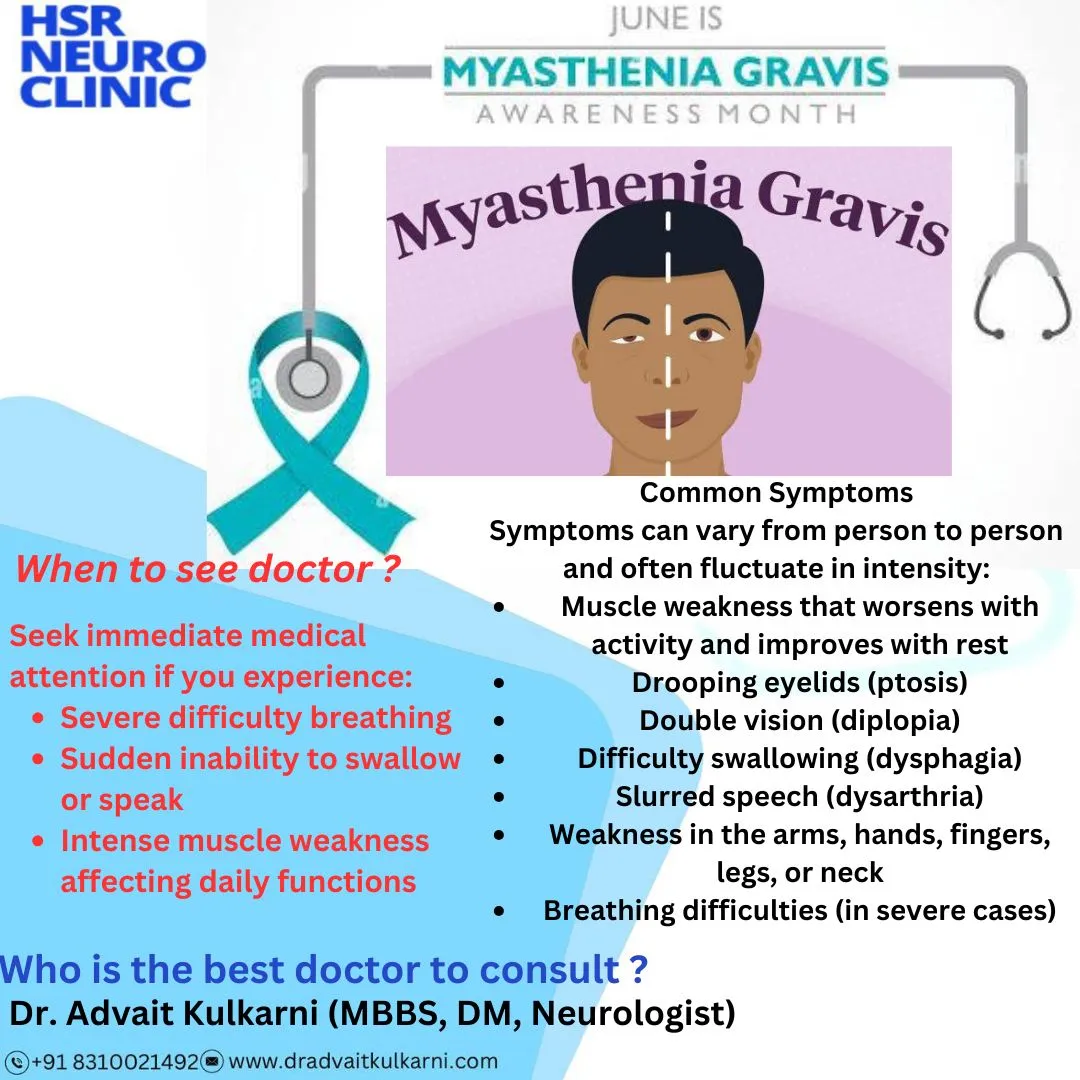
Myasthenia Gravis (MG) is a chronic autoimmune neuromuscular disorder that leads to weakness in the voluntary muscles. The condition occurs because the body’s immune system produces antibodies that disrupt communication between nerves and muscles, making it difficult for muscles to contract normally.
Who is Affected?
MG can affect people of any age, though it is more common in women under 40 and men over 60.
Certain factors, such as infections or stress, can worsen symptoms.
Treatment Options
While there is no cure for MG, treatments help manage symptoms effectively:
Medications:
Immunosuppressants: Reduce the immune system's attack on nerve receptors
Plasmapheresis or Intravenous Immunoglobulin (IVIG): Used during severe flare-ups to remove harmful antibodies
Thymectomy: Surgical removal of the thymus gland may help some patients achieve long-term improvement
Lifestyle Adjustments: Balancing rest with activity and managing triggers like infections and stress
Living with Myasthenia Gravis
Energy Conservation: Plan activities around periods when you have the most energy
Medication Adherence: Consistent medication use is crucial for symptom management
Regular Follow-Ups: Monitoring symptoms and adjusting treatment as needed
Support Systems: Joining patient support groups can provide emotional and practical assistance
Key Takeaway
With proper treatment and lifestyle management, many people with MG can lead full and active lives. Early diagnosis and ongoing care are essential to control symptoms and maintain quality of life.
For more information or specific concerns about your condition, please consult Dr. Advait Kulkarni. Stay proactive in your care and well-being!
Take an Appointment for consultation on
www.dradvaitkulkarni.com
Who is Affected?
MG can affect people of any age, though it is more common in women under 40 and men over 60.
Certain factors, such as infections or stress, can worsen symptoms.
Treatment Options
While there is no cure for MG, treatments help manage symptoms effectively:
Medications:
Immunosuppressants: Reduce the immune system's attack on nerve receptors
Plasmapheresis or Intravenous Immunoglobulin (IVIG): Used during severe flare-ups to remove harmful antibodies
Thymectomy: Surgical removal of the thymus gland may help some patients achieve long-term improvement
Lifestyle Adjustments: Balancing rest with activity and managing triggers like infections and stress
Living with Myasthenia Gravis
Energy Conservation: Plan activities around periods when you have the most energy
Medication Adherence: Consistent medication use is crucial for symptom management
Regular Follow-Ups: Monitoring symptoms and adjusting treatment as needed
Support Systems: Joining patient support groups can provide emotional and practical assistance
Key Takeaway
With proper treatment and lifestyle management, many people with MG can lead full and active lives. Early diagnosis and ongoing care are essential to control symptoms and maintain quality of life.
For more information or specific concerns about your condition, please consult Dr. Advait Kulkarni. Stay proactive in your care and well-being!
Take an Appointment for consultation on
www.dradvaitkulkarni.com
Keywords