Introduction
Neuropsychological assessment plays a crucial role in enhancing patient care for individuals who have experienced a stroke. This brief description explores how neuropsychological assessment helps evaluate cognitive function and identify specific deficits caused by stroke, leading to targeted interventions, personalized rehabilitation, and improved patient outcomes.
Understanding Stroke
Stroke is a debilitating condition resulting from disrupted blood supply to the brain, causing rapid brain cell death. It leads to motor impairments, language difficulties, memory problems, attention deficits, and emotional disturbances. These cognitive and psychological changes significantly affect a person's quality of life and independence.
Role of Neuropsychological Assessment
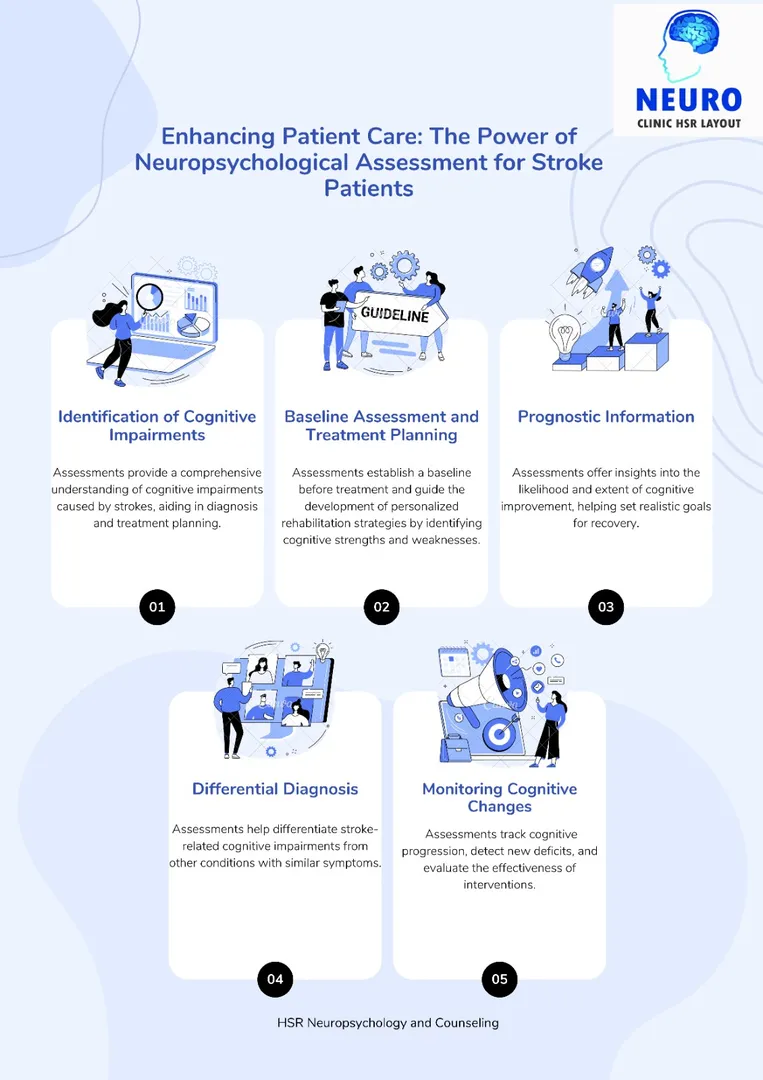
Neuropsychological assessment evaluates cognitive and psychological functioning in stroke patients. It utilizes standardized tests to assess attention, memory, language, executive functions, and visuospatial abilities. By identifying specific deficits, clinicians can tailor treatment plans and provide personalized care.
Early Identification of Cognitive Impairments
Neuropsychological assessment allows for early detection of cognitive impairments in stroke recovery. Prompt identification enables targeted interventions and rehabilitation programs to address deficits, maximizing functional recovery.
Treatment Planning and Rehabilitation
Neuropsychological assessment findings guide treatment planning and rehabilitation strategies. It helps develop targeted interventions such as speech therapy for language difficulties or memory training for memory deficits.
Monitoring Progress and Predicting Outcomes
Ongoing neuropsychological assessments track cognitive progress, identify areas of improvement, and modify treatment strategies accordingly. Assessment results can also predict long-term outcomes, helping patients and families understand prognosis and care needs.
Psychological and Emotional Support
Neuropsychological assessment identifies psychological symptoms like depression and anxiety. It enables clinicians to offer appropriate support, counseling, or referral to mental health professionals, improving patients' overall well-being and quality of life.
Conclusion
Neuropsychological assessment enhances patient care for stroke survivors by evaluating cognitive function, guiding treatment plans, monitoring progress, predicting outcomes, and addressing psychological well-being.
Neuropsychological assessment plays a crucial role in enhancing patient care for individuals who have experienced a stroke. This brief description explores how neuropsychological assessment helps evaluate cognitive function and identify specific deficits caused by stroke, leading to targeted interventions, personalized rehabilitation, and improved patient outcomes.
Understanding Stroke
Stroke is a debilitating condition resulting from disrupted blood supply to the brain, causing rapid brain cell death. It leads to motor impairments, language difficulties, memory problems, attention deficits, and emotional disturbances. These cognitive and psychological changes significantly affect a person's quality of life and independence.
Role of Neuropsychological Assessment
Neuropsychological assessment evaluates cognitive and psychological functioning in stroke patients. It utilizes standardized tests to assess attention, memory, language, executive functions, and visuospatial abilities. By identifying specific deficits, clinicians can tailor treatment plans and provide personalized care.
Early Identification of Cognitive Impairments
Neuropsychological assessment allows for early detection of cognitive impairments in stroke recovery. Prompt identification enables targeted interventions and rehabilitation programs to address deficits, maximizing functional recovery.
Treatment Planning and Rehabilitation
Neuropsychological assessment findings guide treatment planning and rehabilitation strategies. It helps develop targeted interventions such as speech therapy for language difficulties or memory training for memory deficits.
Monitoring Progress and Predicting Outcomes
Ongoing neuropsychological assessments track cognitive progress, identify areas of improvement, and modify treatment strategies accordingly. Assessment results can also predict long-term outcomes, helping patients and families understand prognosis and care needs.
Psychological and Emotional Support
Neuropsychological assessment identifies psychological symptoms like depression and anxiety. It enables clinicians to offer appropriate support, counseling, or referral to mental health professionals, improving patients' overall well-being and quality of life.
Conclusion
Neuropsychological assessment enhances patient care for stroke survivors by evaluating cognitive function, guiding treatment plans, monitoring progress, predicting outcomes, and addressing psychological well-being.
Keywords